
STOP THE TARIFF WAR
Petition for Fair Trade and an end to Unjustified Tariffs
Stand with Canadians, Americans and people around the world
calling for fair trade and an end to unjustified tariff escalation.


1. STOP THE TARIFF WAR
2. Petition for Fair Trade and an End to Unjustified Tariffs
3. We Stand Together Against Tariffs That Harm Workers, Businesses, Families and Consumers
To the Government of the United States, the President of the United States, the United States Congress, the Government of Canada, and governments and elected representatives around the world:
We, the undersigned, citizens, residents, workers, business owners, consumers and concerned people from Canada, the United States and countries around the world, call for an immediate return to fair, stable, predictable and mutually beneficial international trade.
We believe that tariffs should not be used as a weapon of economic coercion, political retaliation or unilateral pressure against trusted trading partners and allies.
We are particularly concerned about the escalating tariff measures imposed by the Trump administration, including tariffs imposed or expanded under Section 338 of the Tariff Act of 1930, Section 232 of the Trade Expansion Act of 1962, and Section 301 of the Trade Act of 1974, as well as additional duties affecting products including automobiles, steel, aluminum, lumber and other goods.
These measures have created uncertainty for businesses, disrupted established supply chains, increased costs and placed additional pressure on workers, families, manufacturers, farmers, retailers and consumers on both sides of international borders.
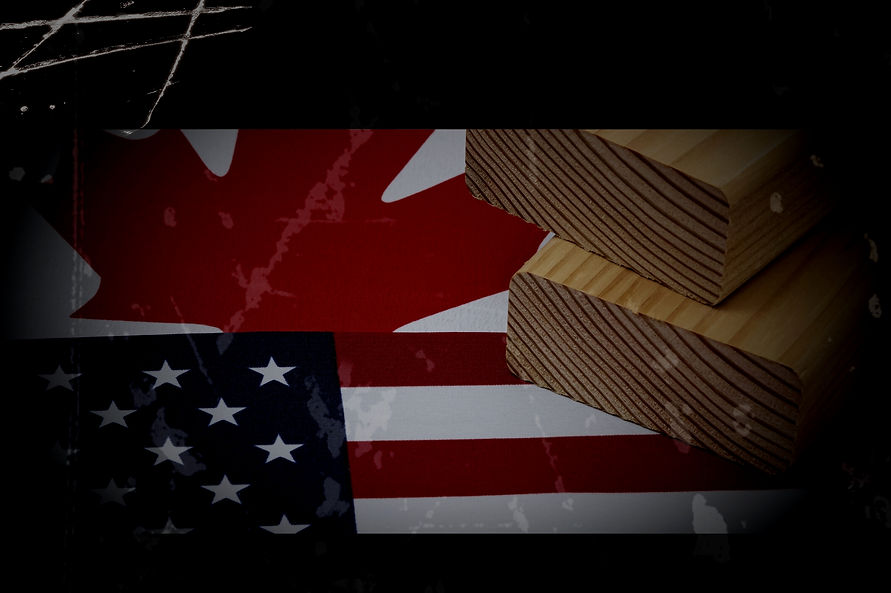
CANADA AND THE UNITED STATES
Canada and the United States share one of the world's largest and most deeply integrated trading relationships.
Millions of Canadians and Americans depend upon this relationship for their livelihoods.
Our economies are interconnected through manufacturing, agriculture, energy, automobiles, forestry, steel, aluminum, technology, transportation and countless small and large businesses.
Tariffs imposed on Canadian goods do not simply affect Canadian producers.
They can also increase costs for American manufacturers and consumers who depend upon Canadian materials, components, energy and products.
Likewise, retaliatory tariffs imposed by Canada can increase costs for Canadian businesses and consumers and place American exporters and workers at risk.
The current escalation is therefore not a victory for either country.
It is a trade war in which ordinary people and businesses can become the collateral damage.

SECTION 338 TARIFFS
The use of Section 338 of the Tariff Act of 1930 to impose additional tariffs on products from countries deemed to discriminate against U.S. commerce.
SECTION 232 TARIFFS
Tariffs imposed under Section 232 of the Trade Expansion Act
of 1962, including measures affecting major industries such as automobiles, steel and aluminum, as well as related products and derivatives.
AUTOMOBILE
Tariffs affecting automobiles and automotive products are particularly significant to Canada and the United States because
of the deeply integrated North American automotive industry.
Vehicles and components can cross the Canada-U.S. border multiple times during the manufacturing process.
Tariffs imposed at different stages can increase costs throughout the supply chain affecting workers, manufacturers and consumers.
STEEL & ALUMINUM
Canada and the United States have one of the world's most integrated steel and aluminum industries.
Tariffs on these materials can increase costs for manufacturers that rely upon them while disrupting established supply chains and markets.
LUMBER & FOREST
Canada's forestry industry is deeply connected to the U.S. housing, construction and manufacturing markets.
Tariffs and duties affecting Canadian lumber and wood products can increase costs throughout the construction supply chain and ultimately affect businesses, workers and consumers.
SECTION 301 TARIFFS
The Trump administration has invoked Section 301 of the Trade Act of 1974 on 60 economies worldwide, including Canada. These unjustified tariffs range from 10% to 12.5%.
The use of broad tariff measures under different statutory authorities contributes to uncertainty for businesses attempting to plan investments, manage supply chains, employ workers and serve customers.
WE REJECT THE CYCLE OF ESCALATION
Canada and other countries have responded to U.S. tariffs with retaliatory measures of their own.
Canada has announced additional counter-tariffs, including measures which have taken effect September 8, 2026, matching certain U.S. Section 338 tariffs on a dollar-for-dollar basis.
We recognize that governments have the right to defend their national interests and respond to unfair trade practices.
However, retaliatory escalation creates a cycle in which tariffs lead to counter-tariffs, which lead to further tariffs, ultimately increasing costs and uncertainty for the very people governments are supposed to protect.
We call for this cycle to end.

WE CALL FOR ACTION ✅
We call upon the United States Government to:
1. REVIEW AND RECONSIDER TARIFFS
Review and reconsider tariffs imposed on Canada and other trading partners where there is no clear, proportionate and compelling justification for their continued application.
2. REDUCE AND ELIMINATE UNJUSTIFIED TARIFFS
Reduce and ultimately eliminate unjustified tariffs that unnecessarily harm workers, businesses and consumers.
3. PROTECT STABLE TRADE RELATIONSHIPS
Respect the importance of long-standing trade relationships and trusted alliances.
4. RETURN TO MEANINGFUL NEGOTIATIONS
Return to meaningful negotiations with Canada and other affected trading partners.
5. USE NEGOTIATION INSTEAD OF ESCALATION
Pursue trade disputes through negotiation and established international trade mechanisms rather than indefinite tariff escalation.
6. PROVIDE BUSINESSES WITH PREDICTABILITY
Provide businesses with a stable and predictable trade environment in which they can invest, hire, manufacture and compete.
WE CALL UPON CANADA AND OTHER AFFECTED COUNTRIES ✅
We also call upon Canada and other countries affected by U.S. tariffs to:
1. RESPOND PROPORTIONATELY AND STRATEGICALLY
Protect their workers, businesses and consumers while avoiding unnecessary economic escalation.
2. PROTECT THEIR ECONOMIES
Take appropriate measures to protect domestic workers, businesses, industries and consumers from unnecessary economic harm.
3. CONTINUE PURSUING DIPLOMATIC SOLUTIONS
Continue pursuing diplomatic and negotiated solutions to trade disputes.
4. AVOID UNNECESSARY ESCALATION
Avoid unnecessary escalation wherever meaningful alternatives exist.
5. REMOVE RETALIATORY TARIFFS WHEN POSSIBLE
Work toward the removal of retaliatory tariffs when the corresponding U.S. tariffs are removed.

THIS IS NOT A PETITION AGAINST THE AMERICAN PEOPLE 🇨🇦🤝🇺🇸
We want to make this clear:
The TARiFFied Movement is not against the people of the United States.
We stand with American workers, farmers, manufacturers, entrepreneurs, families and consumers who can also be affected by the consequences of escalating tariffs.
We believe Canadians and Americans have far more in common than the policies that divide us.
The same principle applies to people around the world.
AN INTERNATIONAL MOVEMENT
Although TARiFFied was founded in Canada and Canadians are among those most directly affected by the current U.S.-Canada tariff dispute, this petition is open to people from every country affected by unjustified U.S. tariffs.
We welcome Canadians, Americans and people from every nation who believe that international trade should be based upon fairness, cooperation, negotiation and mutual economic benefit.
This is not about choosing Canada over the United States.
It is about choosing cooperation over confrontation. ✔
It is about choosing negotiation over escalation. ✔
It is about choosing fair trade over destructive trade wars. ✔

OUR DEMAND ✊
We call upon President Trump, the United States Government, the United States Congress, the Government of Canada, and governments around the world to work toward:
THE REDUCTION AND ELIMINATION OF UNJUSTIFIED TARIFFS, THE DE-ESCALATION OF RETALIATORY TRADE MEASURES, AND THE RESTORATION OF FAIR, STABLE AND MUTUALLY BENEFICIAL INTERNATIONAL TRADE.
We believe that workers should not lose their livelihoods because governments cannot resolve their differences.
Businesses should not be forced to abandon established markets because of unpredictable tariff changes.
Families should not have to pay higher prices because of escalating trade disputes.
And countries that have been allies and trading partners for generations should not allow tariffs to become a permanent substitute for diplomacy.
WE STAND TOGETHER
🇨🇦🤝🇺🇸🤝🌎
We are Canadians.
We are Americans.
We are citizens of the world.
We are workers, entrepreneurs, farmers, manufacturers, consumers and families.
We believe that trade should build relationships — not destroy them.
We believe that cooperation is stronger than confrontation.
We believe that fair trade benefits everyone.

SIGN THE PETITION ✅
ADD YOUR VOICE TO THE MOVEMENT!
By signing this petition, I support the TARiFFied Movement's call for fair international trade, the reduction and elimination of unjustified tariffs, the de-escalation of retaliatory trade measures, and a return to meaningful negotiations between nations.
